Showing posts with label Free-hacking-course-Multan.. Show all posts

Thursday, January 19, 2023

Certified Ethical Hacking Training Course in multan

 
Certified Ethical Hacking Training Course in multan  2023   

Certified Ethical Hacking Training Course in Karachi


Certified Ethical Hacking Training Course in Multan

CEH Ethical Hacking Training Course in Multan Pakistan

 CEH Ethical Hacking Training Course in Multan Pakistan 2023

CEH Ethical Hacking Training Course in Multan Pakistan
CEH Ethical Hacking Training Course in Multan Pakistan 


Monday, November 21, 2022

Introduction to hacking , its benefits and scope in future to become Ethical hacker

 Introduction to hacking , its benefits and scope in future to become Ethical hacker 2022


In this Article I am going to tell you about the Introduction to hacking , its benefits and scope in future to become Ethical hacker so that you will come to know about the basic information about Ethical hacking. As you know that we are offering you the Ethical hacking course so that you can be successful in this field if you wants to have this as a profession in the future. As many of you thought that hacking is illegal and that it has no scope in future and is not good for everyone. Let me clear that hacking is something which is done to hack someone's personal information or sensitive information but its not necessary that we have to become black hat hacker in future. We have to choose Ethical hacking for the future protection of our sensitive information and also the cybersecurity companies are so desperate that they wanted the best Ethical hacker to work with them to protect their sensitive information.

So, if anyone of you are interested to join our course then you can join it and for more information you can contact us.

Now, I am going to tell you about the Introduction to hacking , its benefits and scope in future to become Ethical hacker.

Ethical hacking:


Ethical hacking includes authorized attempts to gain unauthorized access to  computer systems, applications, or data. Ethical hacking requires replicating the strategies and behaviors of malicious attackers. This practice helps  identify security vulnerabilities so that they can  be fixed before  malicious attackers can exploit them.

Unlike malicious hackers, ethical hackers have  permission and approval from the organizations they hack. Learn how to build a career in testing  network security, fighting cybercrime, and improving information security.

Ethical hacking is conducting a security assessment using the same techniques  hackers use, but with proper approval and authorization from the organization being hacked. The goal is to leverage cybercriminal tactics, techniques, and strategies to identify potential vulnerabilities and better protect organizations against data and security breaches.

Ethical hackers, also known as  white hat hackers, are information security professionals who gain permission to enter computer systems, networks, applications, or other computing resources on behalf of  their owners. Companies are asking ethical hackers to uncover potential security flaws that malicious hackers can exploit. The purpose of ethical hacking is to assess the security of a targeted system, network, or system infrastructure and identify vulnerabilities. This process involves finding and exploiting vulnerabilities to determine if unauthorized access or other malicious activity is possible.

What are the meanings and key concepts of ethical hacking?
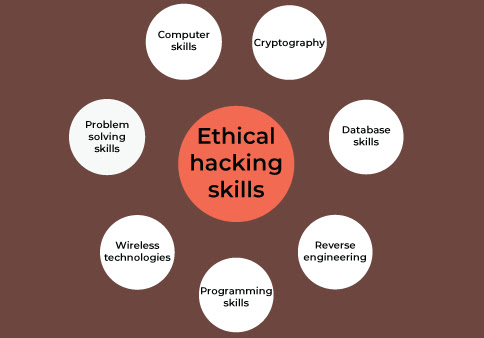


Ethical hacking is very important as it helps protect your network from cyberattacks. Ethical hacking is a special type of penetration testing performed for security purposes. 

Ethical hacking has three main meanings:
  • It helps you find  vulnerabilities in your network so you can quickly fix them  before they can be exploited by criminals and hackers.
  • It helps improve security by identifying network vulnerabilities and implementing strong security measures.  
  • It also helps educate employees about cybersecurity issues so they don't fall for phishing scams and other attacks.
However, to become an ethical hacker, you must first understand her three key concepts of ethical hacking. The three main concepts of ethical hacking are:

1. Scanning:

A scan identifies the target network, its devices, and their current configuration. This information can be used to identify vulnerabilities and determine which types of ethical hacking attacks are most effective on those devices. 


2.Enumeration

Enumeration gathers information about the target network.  Usernames and passwords that can be used later in the attack. 


3. Exploitation

An exploit is the exploitation of a device vulnerability to gain access to sensitive data or control of that device.

What are the different types of ethical hacking?


Ethical hacking is a complex process involving a combination of skills, techniques, and methods for testing the security of an organization's computer systems. There are many different types of hacking in cybersecurity practice.

1. Black box testing:

 black box testing, hackers have no prior knowledge of the system and test software from outside the system before breaking into the system with a brute force approach. For example, when testing a website, you may not know what kind of server the website is running on or what programming language was used to build the website. This  type of hack is often considered one of the most dangerous types of hack in cybersecurity and is used to identify  network or system vulnerabilities that attackers can exploit. They illegally  access personal information such as credit card numbers and bank accounts to sell or use for illegal purposes such as identity theft and fraud. For example, you can use black box testing  to check user logins, view  account information, change passwords, and log out. Testers don't need to know how to achieve this in the application's code in order to design such tests. 

2. white box testing

 white box testing, hackers know everything about a system, how it works, and its vulnerabilities before attempting to break into it. White-box testing is often performed by developers who want to see how well a system will hold up under pressure before releasing it into production  where attackers will attempt to crack it. They work closely with his IT department and are able to know what's going on under the hood without violating the law, according to company policy. Also, make sure no one hacks into your employer's system. Common examples of white box testing include design reviews, code inspections, data flow analysis, and statement coverage. 

3. Gray box testing:

This is a combination of white box and black box testing. Testers have some knowledge of the system, but not all of it, and must use their deductive reasoning skills and  technical knowledge to find vulnerabilities in the system or network under test. Gray Hats sometimes use their abilities for good and evil. B. Stealing money via computer viruses created by banks or other companies (meaning they could be viewed as malicious). Examples of grey-box testing include areas such as:
  • usability test
  • performance test
  • security test
This approach helps you understand how well your application performs in a real-world environment. This is important for  successful development. 

4. Hacking web applications

Web application hacking exploits security holes and vulnerabilities  in web-based applications. Web applications are typically written in languages ​​such as HTML, CSS, and JavaScript, but  can also be written in other languages ​​such as PHP or Ruby on Rails. Because of the nature of these languages ​​and the way web browsers interpret them, it is possible to perform certain actions on websites without actually being authorized to do so. An example of this is cross-site scripting (XSS), which injects malicious code into the HTML of a website. A well-executed XSS attack  can hijack browser and server sessions without  access to usernames or passwords. 5.  Hacking wireless networks  Wireless network hacking is a type of hacking  that usually exploits security vulnerabilities in your system to gain unauthorized access to your computer network. A classic example of this is the practice of word-driving, where an attacker drives around with a laptop or other device capable of receiving wireless signals, looking for unprotected or poorly protected networks.

How do I choose an ethical hacking course and certification?

Ethical hacking courses and certifications are the best way to learn to hack. However, choosing the right course can be a daunting task. To  make it easier, here are some factors to consider when choosing a course.

1. Period

One of the most important things to look for in any kind of ethical hacking course is the length of the course. Most courses last about nine months, but some courses take up to two years.

 2. Cost

The longer the course, the more detailed the concepts are, and the more expensive. Choose a course that fits your schedule and budget. 

3. availability

Another thing to note about ethical hacking courses is whether they are available online or offline. Some courses are only available online, while others are only available  in physical locations.
Before joining a course, decide which type of learning style you prefer.

 4. Authentication

A third thing to consider when choosing an ethical hacking course is whether it comes with a cybersecurity course certificate. If you want to be certified as an ethical hacker, make sure the course you choose offers certification as part of their curriculum.

Career Benefits of Ethical Hacking


New malware, spyware, ransomware, Trojan horses, and worms are growing every day. As a result, hiring ethical hackers has become paramount in securing corporate and government networks and systems. This contributes to the ongoing shortage of cybersecurity professionals to fill vacancies. Security Magazine predicts that  3.5 million cybersecurity jobs will be gone by 2022. According to the US Department of Labor (table below), the average annual salary for an information security analyst (ethical hacker) is about $100,000, while the average salary for a computer programmer  is about $84,000. Job prospects for  information or cybersecurity analytics are promising, growing at a rapid rate of 28% compared to an average of 7%. Compensation for senior cybersecurity positions such as B. As Chief Information Security Officer, can reach  $400,000 per year. It's easy to see why  ethical hacking professionals are in such high demand. One Cisco reports that 29% of businesses have lost revenue due to  security breaches. According to Forrester Research, 95% of the records broken in 2016 came from his three sectors:
Government, Retail, Technology. Indeed has a list of over 800 active  ethical hackers with salaries ranging from $70,000 to $120,000. Our Certified Ethical Hacker course trains you in the advanced practices  hackers use to better protect your networks and systems from data breaches and threats. This certified ethical hacking course helps you build your network security skills by mastering advanced techniques in network packet analysis, reverse engineering, and system penetration testing. You can gain a deeper understanding of how hackers think and think, and avoid attacks, or at least minimize the damage to your organization's and authorities' data.  

We excels at learning with an accredited ethical hacking course that includes 40 hours of instructor-led learning sessions, an EC Council learning materials kit, and her six months of free access to her CEH v10 lab  to practice the tech have a pedigree. You also get lifetime access to high-quality, self-paced eLearning content and live lesson recordings.

Start your career as an ethical hacker today

The ethical hacking profession is rapidly gaining momentum  as companies increase their spending to combat cybersecurity threats. If you're passionate about cybersecurity, our certified ethics course is  for you. The theory and practical knowledge gained from  Our Certified Ethical Hacker curriculum, along with the right knowledge and mindset, can put her on the right path to becoming an Information Security Analyst or Cybersecurity Professional.  what are you looking for Get ready for the future by enrolling in Our Certified Ethical Hacking Course. 

The future of ethical hacking in Pakistan:

The field of ethical hacking has a very bright future in Pakistan. The need for ethical hackers is  expected to continue to grow in the coming years. India is a country with a large number of people working in the  information technology field. The growing need for responsible computer he hackers in India is due to various factors.

The main reason for this is the increase in cyberattacks. As more people use the Internet, the frequency of cyberattacks is also increasing. Various organizations and companies have been targeted by this type of attack. Malicious attackers are always looking for new entry points to exploit  system flaws. They use various hacking techniques to gain access to  networks and steal sensitive information. Ethical hackers  help companies find vulnerabilities in  computer systems so that bugs can be fixed before adversaries can exploit them. The second factor is the growing awareness of the importance of maintaining strong cybersecurity measures. At this point, both people and businesses recognize the importance of maintaining good cybersecurity. 

They recognize that cyberattacks can expose personal data and affect an organization's day-to-day operations. Ethical hackers help companies protect their networks from various types of cyberattacks. The strict nature of  rules and regulations is her third factor. Governments issue many rules and regulations  to ensure that businesses comply with cybersecurity standards. Businesses can comply with  rules and regulations with the help of  ethical hackers. Fourth on the list of reasons is the need to protect a company's reputation. Attacks from cyberspace can damage an organization's reputation. Ethical hackers help protect a company's image by finding and fixing vulnerabilities found in an organization's systems. The sixth reason is because we want to keep costs down. Organizations can suffer  financial losses as a direct result of cyberattacks. Ethical hackers help companies reduce operating costs by finding and fixing vulnerabilities in  company systems. 
 Ethical hackers are an invaluable asset to a company's efforts to maintain  privacy and security. It helps companies identify vulnerabilities in their systems and implement fixes for those vulnerabilities. 

Monday, November 14, 2022

Best Ethical Hacking course near me in Multan 2022

 Best Ethical Hacking course near me in Multan 2022

Best Ethical Hacking course near me in Multan 2022

In this Article I am going to tell you about the Best Ethical Hacking course near me in Multan 2022 to become the best ethical hacker in future. This is the best course for those who wanted to have Ethical hacking as a profession in the future.

If anyone of you are interested to join our course then you can contact us. The course content of Best Ethical Hacking course near me in Multan 2022 is given below:

  • Information security and ethical hacking
  •  reconnaissance techniques
  •  system hacking phases and attack techniques
  •  network and perimeter hacking
  •  web application hacking
  •  wireless network hacking
  •  mobile devices
  • Internet of Things (IoT) and operational technology (OT) hacking  cloud computing
Hacking involves identifying and exploiting weaknesses in computer systems or computer networks. Cybercrime uses computers and information technology infrastructure to commit crimes. Ethical hacking is about improving the security of computer systems and computer networks. Ethical hacking is legal.

Ethical Hacking:

There are various definitions you can learn about hackers. The term hacker was used in the early 1990s  to describe someone with the ability to solve complex problems who could be a good programmer. Now, the definition of a hacker has changed from time to time because it started to have a negative sentiment in the media. I started labeling myself as a person. This image was  created by the media to show only  the negative side, not the positive side. On the positive side was the person who published the vulnerabilities found in the system, protecting the organization and several users. 

Simply put, a hacker can be defined as someone who is creative and able to  solve complex problems. For this reason, the term he falls into three different categories. 


White Hat Hacker  

Hacker known as a security expert. This type of hacker is used by organizations and allowed to attack organizations. Their main task is to find  vulnerabilities that attackers can exploit, so they can attack your organization. 

Black Hat Hacker  

is a type of hacker who uses  knowledge for malicious purposes. You are a person who can be called a cracker. The way they use their knowledge is to  access user information that could be dangerous to their victims. 

Gray Hat Hacker 

It is a type of hacker who acts as both a white hat hacker and a black hat hacker . Example: 
- A gray hat hacker can act as a security expert for any organization and find vulnerabilities that still exist in the system. However, it can leave a backdoor that can access sensitive information and  sell it to the company's competitors. 

What  types of hacking are there? 

There are several ways to hack a system  - 

1. Computer Hacking or System Hacking - This type of hacking involves breaking into individual systems or computers within a network. Includes access. This is common when the target is a single target or when the goal is to steal information from a network of computers. Breaking into systems and identifying vulnerabilities is the job of an ethical hacker. 

2. Network Hacking or Wireless Network Hacking - Wireless hacking is the process of stealing, capturing, or monitoring  wireless packets within a particular network. Once hackers gain access to your wireless network, they can also access your passwords, chat sessions, user history, and more. Ethical hackers use similar methods to infiltrate wireless networks and find new alternatives used by black hat hackers. 

3. Email Hacking - In the digital world of business, emails contain highly sensitive data and information that hackers may be interested in. Email hacking involves hacking a network to obtain email passwords or gaining unauthorized access to  an individual's or company's employee's email. This can reveal someone's private life or leak sensitive data from business emails. Phishing attacks (pervasive) can also allow users to compromise their personal information and data security. 

4.  Hacking a website or hacking a web application – Unethical hackers may be interested in hacking a website or web server because it can negatively impact your business. This can lead to prolonged website downtime (loss of business, detection and recognition),  software and database theft, and even permanent damage. However, ethical hackers attempt  this with permission and  suggest ways to fix cracks.
 
 5. Hacking passwords can be  part of hacking a computer or system: Hackers use data stored on computers and  servers to gain access to passwords for websites, computers, emails, accounts, etc. and  use this information for malicious purposes. Ethical hackers do this using similar methods, identifying all security measures that can be taken to prevent this.

Phases of Ethical Hacking:

Ethical hacking has five phases  to ensure  all  cybersecurity infrastructure is covered while ethical hackers test an organization's network. These phases will help you understand the basics of ethical hacking. 

Reconnaissance - This is the first stage of ethical hacking, often called the preparatory stage. At this stage, ethical hackers gather enough information,  plan, and prepare to attack. The first phase of reconnaissance is garbage collection, where  ethical hackers try to find useful information such as old passwords, employee databases, customer databases, and archived financial information. The next step is  the footprint. Hackers collect necessary information related to the hacking process, such as: Examples: security frameworks, IP addresses, etc. 

Scanning - Scanning is the process of quickly accessing the outer layers of a network or system's security framework. At this stage, hackers are also looking for relevant information. The first step is pre-attack scanning, which uses intelligence from reconnaissance  to gather more information. The second step is sniffing or port scanning. Hackers use tools such as vulnerability scanners, port scanners, and dialers to monitor networks. Finally, information extraction gathers information about  ports, physical machines, and system details  to prepare for  hacking attacks. 

Gaining Access – After collecting all  relevant information, the next step for hackers is to gain access to a network or  system. When this happens, hackers gain full control with access to network details and individual systems. or to allow enough time to achieve the hacking objective. Additional attacks are also launched if the hackers need more time or want to inflict more damage. 

Hide Your Footprints – Evading guards and built-in security systems is just as important as gaining access. This is done by following procedures such as closing open ports, clearing log files, clearing all cookies, etc. This prevents hacking attempts from being traced back to the hacker. 

Thursday, November 10, 2022

Free Cybersecurity course in Multan to be aware of hackers attack

 Free Cybersecurity course in Multan to be aware of hackers attack 2022

Free Cybersecurity course in Multan to be aware of hackers attack

Dear viewers, In this blog I am going to offer you Free Cybersecurity course in Multan to be aware of hackers attack so that you will be able to be aware of the hackers attack. This is the best course for those who wanted to be successful in the field of hacking and protect their systems away from the hackers attack.
This is the best course offering to you, If anyone of you are interested to join our course then you can contact us.

Now I am going to explain you about the Free Cybersecurity course in Multan to be aware of hackers attack.

What is Cybersecurity?

Cybersecurity is the protection of  systems such as hardware, software, and data connected to the Internet from cyberthreats. This practice is used by individuals and businesses to protect against unauthorized access to data centers and other computerized systems.

Types of Cybersecurity:

The three main types of cybersecurity are:

  •  network security
  •  cloud security
  •  physical security. 

Your operating system and network architecture make up your network security. It can include network protocols, firewalls, wireless access points, hosts, and servers.

Network security:


Network security is a set of technologies designed to protect the usability and integrity of an organization's infrastructure by preventing various potential threats from entering or propagating within the network.

Network security includes access control, viruses and antivirus software, application security, network analysis, network-related security types (endpoint, web, wireless), firewalls, VPN encryption, and more.

Cloud security:


Cloud security, additionally called cloud computing security, is a set of safety features designed to defend cloud-primarily based totally infrastructure, applications, and records. These measures make certain consumer and tool authentication, records and aid get entry to control, and records private protection. 

The 3 major forms of cloud deployment fashions are private, public, or hybrid.

Physical security:


Physical security is the protection of personnel, hardware, software, networks, and data from physical actions or events that could cause significant loss or damage to a business, government agency, or agency. This includes protection against fire, flood, natural disasters, robbery, theft, vandalism and terrorism.
 
Sensors, alarms, and automatic notifications are  examples of physical security detections. 3. Delay - There are certain security systems  designed to delay intruders attempting to enter a facility or building. Access controls such as, for example, requesting a card key  or mobile ID card is one method of delay.

What Is a Cybersecurity Professional? 

As data breaches, hacks, and cybercrime reach new heights, organizations turn to cybersecurity professionals to identify potential threats and protect valuable data. increasingly dependent. It makes sense that the cybersecurity market is expected to grow from $152 billion in 2018 to $248 billion in 2023. 

So what do cybersecurity professionals do? 

What they can do on a daily basis: 

  • Find, test, and fix vulnerabilities in your organization's infrastructure. 
  • Monitor systems for malicious content 
  • Identify network breaches 
  • Install regular software updates, firewalls, and antivirus protection 
  • Strengthen areas where attacks may have occurred 
They work in one or more of these common Cyber Security domains to keep data safe: 

Asset security: 

Analyze networks, computers, routers, and wireless access points
 
Security architecture and engineering:
 Standardize security policies and procedures
 
Communication and network security: 
Regulate cloud storage and data transfer 

Identity and access management: 
Track user authentication and accountability 

Security operations: 
Monitor security to identify attacks 

Security assessment and testing: 
Test security policies to ensure compliance with industry standards 

Software development security: 
Create and repeatedly test code 

Security and risk management: 
Identify potential risks and implement appropriate security controls 

Cyber Security experts employ different tactics to secure computer systems and networks.

Some of the best practices include: 

  • Using two-way authentication 
  • Securing passwords 
  • Installing regular updates 
  • Running antivirus software 
  • Using firewalls to disable unwanted services 
  • Avoiding phishing scams 
  • Employing cryptography, or encryption 
  • Securing domain name servers, or DNS 

Importance of Cybersecurity: 

In today's connected world, everyone benefits from an advanced cyber defense program. On a personal level,  cybersecurity attacks can have consequences ranging from identity theft to extortion attempts to  loss of important data such as family photos. It relies on critical infrastructure such as Protecting these and other organizations is essential for our society to function. 

Everyone also benefits from the work of cyber threat researchers, such as Talos' team of 250 threat researchers studying new  threats and cyber attack strategies. They discover new vulnerabilities, educate the public on the importance of cybersecurity, and enhance open source tools. Your work makes the internet safer for everyone.

What are the top security threats? 

First, we need to understand the difference between information security and cybersecurity, and the types of threats we face almost every day. Both the information security threats that exist today and the  emerging threats that will surely plague organizations tomorrow. 

Malware 

The most common cyber attack is malicious software, better known as malware. Malware includes spyware, ransomware, backdoors, Trojan horses, viruses, and worms. 

spyware is software that allows an attacker to obtain information about a user's computer her activities by covertly transferring data  from the user's hard drive. 
ransomware is designed to encrypt files on your device and render all files (and the system based on them) unusable. Malicious attackers usually demand a  ransom in exchange for decryption. The 
 backdoor bypasses normal authentication procedures to gain access to systems. This allows attackers to remotely access resources within your application, Databases and file servers. It also allows malicious actors to issue system commands and update malware remotely. 
Trojan is malware or code that acts as a legitimate application or file to trick users into loading and running malware on their device. The purpose of a Trojan horse is to destroy or steal an organization's data or damage a network. 
A computer virus is  malicious  computer code designed to spread from device to device. These self-cloning threats are usually aimed at damaging your computer or stealing your data. The 
worm is malware that spreads copies of itself from computer to computer without human intervention and does not need software attached to his program to cause damage. 

Malware is usually installed on a system when a user opens a malicious link or email. Once installed, the malware can block access to critical components of your network, damage your system and export sensitive information to unknown destinations. 

  • Prevent malware-based cyber-attacks with proven antivirus and antimalware solutions, email spam filters, and endpoint security solutions. 
  • Make sure you have all the latest cybersecurity updates and patches. 
  • Require employees to complete regular cybersecurity awareness training sessions to teach employees how to avoid suspicious websites and not engage in suspicious emails. 
  • Restrict user access and application privileges. 

Phishing and Spear Phishing 

phishing is a form of social engineering that attempts to trick users into revealing sensitive information such as usernames and passwords, bank account information, social security numbers,  credit card details, and more. 

Hackers typically send  phishing emails that appear to come from trusted senders such as PayPal, eBay, financial institutions, or friends and colleagues. Fake messages try to trick users into clicking links in emails. This redirects users to fake girlfriend websites that ask for personal information or install malware on the device. 

Opening attachments sent in phishing emails can also install malware or allow hackers to remotely control your device. 

Spear phishing is a more sophisticated  phishing attack in which cyber criminals target only privileged users such as system administrators and  executives. Attackers can use someone's social media account details to appear more legitimate to their targets. 

Other types of phishing  include smishing, vishing, clone phishing, domain spoofing, URL phishing, watering hole phishing, and evil twin phishing. Everything can get very expensive. 

Organizations can take several steps to reduce the likelihood of phishing. 
  • Emphasizes the importance of phishing reports. 
  • Run a random phishing simulation. 
  • Website pushes HTTPS for a secure and encrypted connection. 
  • Institutional Access Control Policies and Procedures. 
  • Use reliable email and spam filters. 
  • Two-factor authentication required. 
  • Use email encryption and email signing certificates. 

Man-in-the-Middle (MITM) Attacks 

These attacks occur when a malicious actor gets in the middle of her two-way communication. Once an attacker intercepts  incoming messages, they can hack your system.

Distributed Denial of Service (DDoS) 

 DDoS attacks aim to bring down a company's website by flooding the server with requests. It's like constantly calling your company phone number. Therefore, legitimate callers only get a busy signal and never get connected. 

This attack sends requests  from hundreds or thousands of IP addresses. These IP addresses may also have  been compromised and tricked into continuously requesting your company's website. 

A DDoS attack can overload a server, slow it down significantly, or take it temporarily  offline. These shutdowns will prevent customers from visiting her website to complete orders. 

Structured Query Language (SQL) Injection 

A SQL injection attack occurs when a cybercriminal uploads a malicious SQL script to try to access a database. If successful, malicious actors can view, modify, or delete data stored in the SQL database. 

Domain Name System (DNS) Attacks 

 DNS attacks are cyberattacks in which cybercriminals exploit vulnerabilities in  DNS. Attackers exploit her DNS vulnerabilities to redirect website visitors to malicious sites (DNS hijacking) and exfiltrate data from compromised systems (DNS tunneling).

Monday, November 7, 2022

Free Digital Forensic course in Multan to be the best in ethical hacking

 Free Digital Forensic course in Multan to be the best in ethical hacking 2022

Thursday, October 13, 2022

Mobile hacking course Multan to hack any android mobile phone very easily

 Mobile hacking course Multan to hack any android mobile phone very easily 2022

Thursday, October 6, 2022

Ethical Hacking course near me in Multan to be the top Ethical hacker.


 Ethical Hacking course near me in Multan to be the top Ethical hacker 2022.

Monday, October 3, 2022
Which institute is best for hacking course in Multan?


Which institute is best for hacking course in Multan 2022

Certified Ethical Hacking Training Course Multan to become master in Hacking

 Certified Ethical Hacking Training Course Multan to become master in Hacking 2022
Certified Ethical Hacking Training Course Multan to become master in Hacking

In this article you will come to know about the Certified Ethical Hacking Training Course Multan provided by Alhuda institute 
Multan to become master in hacking.
The Alhuda training center is giving full training of hacking practically to everyone who were interested in hacking or wants to know about the tips or techniques about hacking. This training course has a great scope in Pakistan and has great job opportunities for those who wanted to be professional in hacking.

So, I want to tell you that if you wat to be professional in hacking and wants to hack
  • Hijack your usernames and passwords
  • Steal your money and open credit card and bank accounts in your name
  • Ruin your credit
  • Request new account Personal Identification Numbers (PINs) or additional credit cards
  • Make purchases
  • Add themselves or an alias that they control as an authorized user so it’s easier to use your credit
  • Obtain cash advances
  • Use and abuse your Social Security number
Sell your information to other parties who will use it for illicit or illegal purposes.

So, if you want to join Certified Ethical Hacking Training Course Multan and want to be professional in this field, then please visit our institute for hacking training course.

Certified Ethical Hacking Training Course Multan contains the following course content for hacking:

Course Outline 

  
  •  Key troubles plaguing the facts safety world, incident control process, and penetration checking out 
  •  Various kinds of footprinting, footprinting equipment, and countermeasures 
  •  Network scanning strategies and scanning countermeasures 
  •  Enumeration strategies and enumeration countermeasures 
  •  System hacking methodology, steganography, steganalysis assaults, and masking tracks 
  •  Different kinds of Trojans, Trojan evaluation, and Trojan countermeasures 
  •  Working of viruses, virus evaluation, laptop worms, malware evaluation procedure, and countermeasures 
  •  Packet sniffing strategies and a way to shield in opposition to sniffing 
  •  Social Engineering strategies, become aware of theft, and social engineering countermeasures 
  •  DoS/DDoS assault strategies, botnets, DDoS assault equipment, and DoS/DDoS countermeasures 
  •  Session hijacking strategies and countermeasures 
  •  Different kinds of webserver assaults, assault methodology, and countermeasures 
  •  Different kinds of internet utility assaults, internet utility hacking methodology, and countermeasures 
  •  SQL injection assaults and injection detection equipment 
  •  Wireless Encryption, wi-fi hacking methodology, wi-fi hacking equipment, and wi- safety equipment 
  •  Mobile platform assault vector, android vulnerabilities, jailbreaking iOS, home windows  vulnerabilities, cell safety guidelines, and equipment 
  •  Firewall, IDS and honeypot evasion strategies, evasion equipment, and countermeasures 
  •  Various cloud computing concepts, threats, assaults, and safety strategies and equipment 
  •  Different kinds of cryptography ciphers, Public Key Infrastructure (PKI), cryptography assaults, and cryptanalysis equipment 
  •  Various kinds of penetration checking out, safety audit, vulnerability assessment, and penetration checking out roadmap 
  •  Perform vulnerability evaluation to become aware of safety loopholes with inside the goal organization's 
  •  network, communique infrastructure, and quit systems. 
  •  Different threats to IoT structures and discover ways to shield IoT gadgets securely
To become master in hacking you can keep doing it practically and join our Certified Ethical Hacking Training course Multan.

Free Hacking Course in Multan from Basic to Advance hacking tricks

 Free Hacking Course in Multan from Basic to Advance hacking tricks 2022

Free Hacking Course in Multan from Basic to Advance hacking tricks

Alhuda institute is offering Free Hacking course Multan to become a certified hacker from basic to advance level. So for those who were interested in the Hacking course Multan, will be welcome to join our hacking course which is free for all of you and is available online.

I am here to know tell you also about the other courses Alhuda institute is offering:

Online Free Courses


   The online hacking course contains the following content:


1. Ethical hacking course syllabus:

  • Introduction to Cyber ​​Ethics
  • Hacking Gathering
  • Information
  • Viruses,
  • Worms - Virus Analysis Trojans & 
  • Backdoors
  • Sniffers and Keyloggers Social Engineering Hacking and security of email, DNS, and IP spoofing
  •  systems honeypot.
Those who were interested in join our course please visit our institute.
For more information, please visit our institute, 1st floor Noor Plaza Opposite Women University Ghanta Ghar Road, Multan.


Wednesday, July 6, 2022

Hacking course multan Ethical Hacking Course in Multan

 Ethical Hacking Course in Multan


Ethical Hacking Course in Multan- Ethical hacking is the art of classifying and securing potential intimidations to digital properties like websites, servers, networks, operating systems and more of society. An ethical hacker is an expert, who is employed by an IT secure or an organization to penetrate into the security in order to locate exposures and to resolve them, and make society digitally impenetrable. Find the best ethical hacking courses for your level and needs, from ethical hacking for beginners to training to become a certified ethical hacker. We help you in the Ethical Hacker course software course trains student on hacking tools and techniques to assess security. At IIEH, In the Certified Ethical hacking Course in order to develop these skills, we will train you in the advanced techniques which are used by both black and white hats so that you can better understand methodologies and provide better security and defend against severe data breaches. You will learn various aspects of Ethical Hacking like network security, web security, OS, and Database Security moreover we will train you with some extra skills which would be helpful in enhancing your abilities as an Ethical Hacker such as Forensics, Compliance, and many more. - Ethical Hacking Course in Multan

avatar
Admin Welcome to Alhuda I.T, if you have anything to ask please via our WhatsApp
Alhuda I.T A.O.A there! Hello, Can I help you? In case of no responce within 30 minutes, visit https://www.alhuda.com.pk
:
Chat WhatsApp